
Last Updated on July 6, 2026 by Dr. Abadullah Sajid Bashir
What Is Irritable Bowel Syndrome (IBS)?
Medically reviewed. Last updated July 2026.
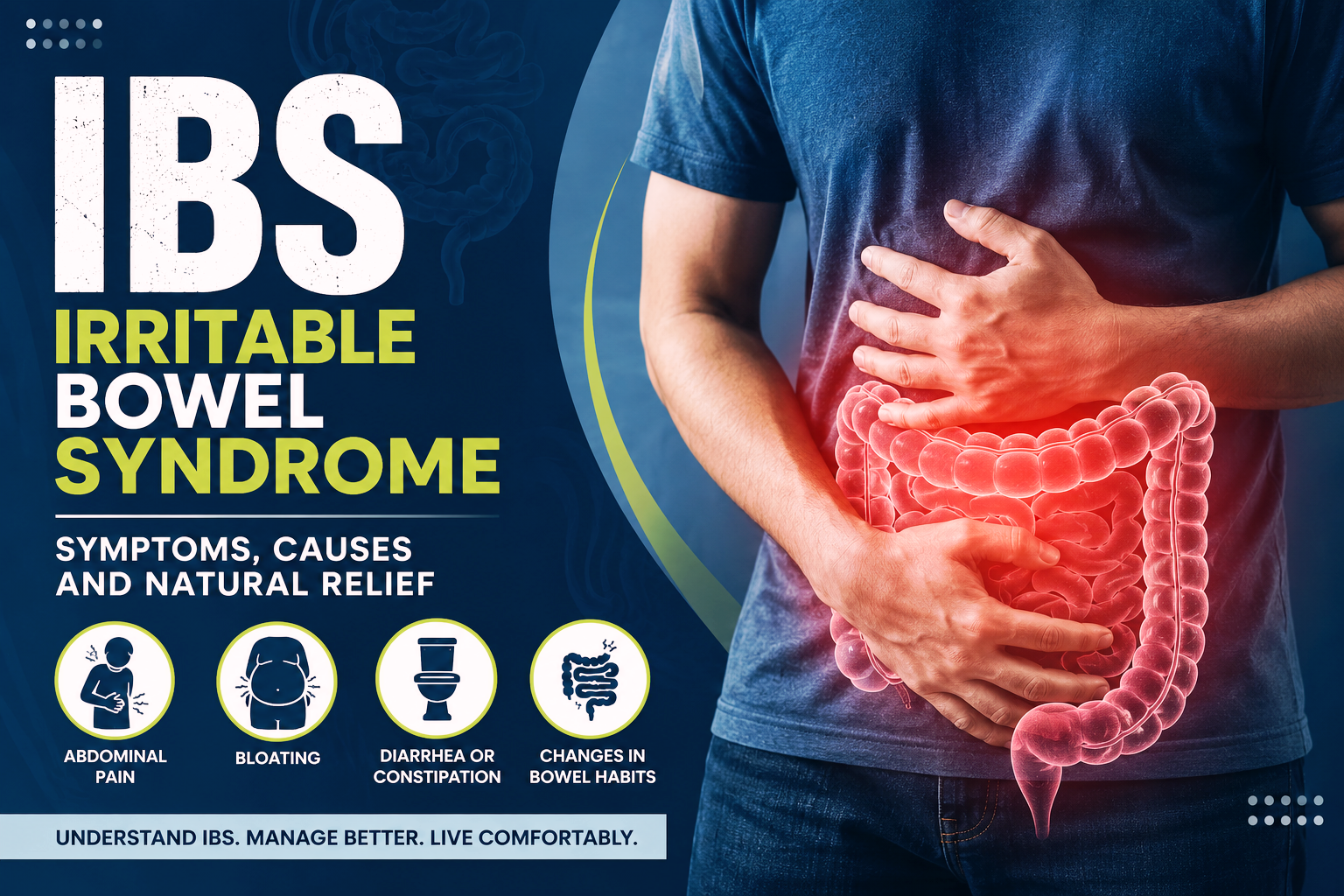
Irritable bowel syndrome (IBS) is a common disorder of gut-brain interaction, a chronic functional condition in which the gut and brain don’t communicate normally, causing recurrent abdominal pain along with a change in bowel habits (diarrhea, constipation, or both). It is a functional disorder, meaning the digestive tract looks structurally normal on standard tests, but it doesn’t work the way it should.
IBS is not life-threatening and does not increase the risk of colorectal cancer or shorten life expectancy, but it can significantly affect quality of life, work, school, and social activities because of its unpredictable symptoms. Core symptoms include abdominal pain, cramping, bloating, gas, and constipation and/or diarrhea (NIDDK).
The exact cause of IBS isn’t fully understood, but research points to a combination of factors: abnormal gut-brain signaling, altered gut motility, visceral hypersensitivity (a lower pain threshold in the gut), changes in the gut microbiome, low-grade inflammation, and psychological factors such as stress, anxiety, and depression (NIDDK).
IBS affects roughly 12 percent of people in the United States, according to NIDDK, with other analyses putting the figure as high as 15 percent (Johns Hopkins Medicine). Women are up to twice as likely as men to develop it, and most people first notice symptoms before age 50 (NIDDK).
Other Names for IBS
IBS is also sometimes called:
- Spastic colon
- Irritable colon
- Nervous stomach
- Mucous colitis (an older, now-outdated term)
- Functional bowel disorder
What Are the Types of IBS?
The Rome IV criteria — the diagnostic framework gastroenterologists actually use — recognize four subtypes of IBS, classified by predominant stool pattern:
- IBS-C (constipation-predominant) – hard or lumpy stools most of the time
- IBS-D (diarrhea-predominant) – loose or watery stools most of the time
- IBS-M (mixed) – both hard and loose stools on different days
- IBS-U (unclassified) – stool pattern doesn’t fit neatly into the categories above
Post-infectious IBS (IBS-PI) is a related and clinically important concept, but it describes how the condition started (following a gastrointestinal infection) rather than a stool-pattern subtype, a patient with IBS-PI will still be classified as IBS-D, IBS-C, IBS-M, or IBS-U based on their symptoms (Barbara et al., Gastroenterology, 2019).
IBS-D (Diarrhea-predominant)
People with IBS-D have frequent loose or watery stools, often with urgency, along with abdominal pain, gas, and sometimes mucus in the stool. Diarrhea can lead to fluid and electrolyte loss if severe or prolonged, so persistent diarrhea should be evaluated by a doctor rather than assumed to be IBS.
IBS-C (Constipation-predominant)
IBS-C involves infrequent bowel movements and hard, lumpy stools that are difficult and often painful to pass, along with bloating and abdominal discomfort.
IBS-M (Mixed)
IBS-M alternates between constipation and diarrhea, sometimes within the same week. This pattern reflects irregular gut motility rather than the gut “switching” between two separate conditions.
IBS-U (Unclassified)
In IBS-U, bowel habits meet the general IBS symptom criteria but don’t consistently fit the diarrhea, constipation, or mixed patterns closely enough to sub-classify. (Drossman Gastroenterology)
Symptoms of IBS
Common symptoms include:
- Abdominal pain or cramping, often relieved somewhat by a bowel movement
- Constipation, diarrhea, or an alternating pattern of both
- Bloating and visible abdominal distension
- Excess gas
- A feeling of incomplete evacuation after a bowel movement
- Mucus in the stool
- Urgency to reach a bathroom
Some people with IBS also experience non-digestive symptoms such as fatigue, headache, back pain, sleep disturbance, and coexisting conditions like anxiety, depression, and fibromyalgia. These associations are well documented, though the reasons for the overlap aren’t fully understood (NIDDK).
What Causes IBS?
There is no single known cause of IBS. Current evidence points to several contributing factors working together, including:
- Gut-brain axis dysfunction – Abnormal communication between the brain and the gut can alter motility and pain perception. (Ohman & Simrén, Nature Reviews Gastroenterology & Hepatology, 2010)
- Visceral hypersensitivity – The gut nerves of people with IBS may register normal digestive sensations as pain.
- Altered gut motility – Food and waste can move through the intestines either too quickly (contributing to diarrhea) or too slowly (contributing to constipation).
- Post-infectious changes – A prior gastrointestinal infection (viral, bacterial, or parasitic) can trigger lasting changes in gut function even after the infection clears (Beatty et al., World Journal of Gastroenterology, 2014)
- Microbiome changes – Imbalances in gut bacteria have been associated with IBS symptoms in multiple studies.
- Mast cell and low-grade immune activation – Some research has found increased mast cells and mild inflammation in the gut lining of people with IBS (Wouters et al., Gut, 2016)
Food Sensitivities
Certain foods don’t cause IBS outright, but can trigger or worsen symptoms in people who already have it. High-FODMAP foods are the best-documented trigger category (see the diet section below) (Wageningen/WJG review on non-celiac wheat sensitivity).
Infections
A bout of gastroenteritis from a virus, bacteria, or, less commonly, parasites — can be followed by IBS symptoms that persist long after the infection itself has resolved. This is called post-infectious IBS and is one of the better-understood triggers (Barbara et al., Gastroenterology, 2019).
Vitamin D Status
Low vitamin D levels have been associated with IBS symptom severity in observational studies, and some small trials suggest supplementation may help certain patients, though evidence is not yet strong enough to make it a standard treatment (Williams et al., European Journal of Clinical Nutrition, 2018).
Menstrual Cycle
Many women report that IBS symptoms fluctuate with their menstrual cycle, likely related to hormonal changes affecting gut motility and sensitivity (PMC review).
Psychological Factors
Anxiety and depression are common in people with IBS, and the gut-brain connection means psychological stress can worsen digestive symptoms and digestive symptoms can, in turn, worsen mood. This is a two-way relationship rather than a simple cause-and-effect one (NIDDK).
Genetics
IBS tends to run in families, suggesting a genetic component, though no single gene explains most cases. One frequently cited study identified SCN5A gene variants — which affect a sodium channel involved in gut muscle contraction, in a small subset (roughly 2 percent) of patients with IBS-D specifically, not in IBS patients generally (Verstraelen et al., Neurogastroenterology & Motility, 2015). Research into IBS genetics is ongoing and no genetic test is currently used to diagnose IBS in routine practice.
How Is IBS Diagnosed?
IBS is a clinical diagnosis — meaning it’s based primarily on a doctor’s evaluation of symptoms against established criteria, not on X-rays, CT scans, or a single blood test. Imaging and lab tests are used to rule out other conditions (such as celiac disease, inflammatory bowel disease, or colon cancer) that can cause similar symptoms, rather than to positively identify IBS itself (Chey, Kurlander & Eswaran, JAMA, 2015).
The Rome IV Criteria
The current standard diagnostic tool is the Rome IV criteria. Under Rome IV, a person is considered to have IBS if they have recurrent abdominal pain, on average, at least one day per week in the last three months, with symptom onset at least six months before diagnosis, associated with two or more of the following:
- Pain related to defecation
- A change in stool frequency
- A change in stool form or appearance
Doctors also screen for “alarm features” — such as rectal bleeding, unintended weight loss, anemia, or a family history of colorectal cancer or inflammatory bowel disease — which, if present, prompt further testing rather than an IBS diagnosis.
Stool tests
Check for blood, infection, or inflammation markers that would point away from IBS toward another condition.
Blood tests
Screen for anemia, celiac disease, thyroid dysfunction, and inflammatory markers.
Endoscopy or colonoscopy
Used selectively, generally for patients with alarm features or those over screening age, to directly visualize the colon and rule out structural disease.
Hydrogen/methane breath testing
Can help identify small intestinal bacterial overgrowth (SIBO), which sometimes coexists with or mimics IBS.
Additional tests
Lactose or fructose intolerance testing, and inflammatory bowel disease markers (such as fecal calprotectin), may be used depending on the individual case.
Treatment Options for IBS
There is no single cure for IBS, but a combination of dietary changes, lifestyle adjustments, and when needed medication or psychological therapies can meaningfully reduce symptoms for most people (NIDDK). Treatment is individualized: what helps one person may not help another, and it typically takes some trial and error, ideally guided by a physician or dietitian.
Diet and the Low-FODMAP Approach
FODMAP stands for Fermentable Oligosaccharides, Disaccharides, Monosaccharides, And Polyols — short-chain carbohydrates that are poorly absorbed in the small intestine. When they reach the large intestine, gut bacteria ferment them, which can produce gas, bloating, and changes in stool consistency in people with IBS.
The low-FODMAP diet is a structured, temporary elimination-and-reintroduction plan — not a permanent restrictive diet — and is best done with guidance from a registered dietitian to avoid unnecessary long-term food restriction (Monash University FODMAP research). Common high-FODMAP triggers include wheat, onion, garlic, certain dairy products, and some legumes, though individual tolerance varies widely.
Lifestyle Changes
- Regular meals, moderate portions – Large meals can trigger the gastrocolic reflex more strongly, worsening urgency and cramping; smaller, regular meals are often better tolerated.
- Physical activity – Regular exercise is associated with improved bowel symptoms and overall gut motility in several studies of IBS patients.
- Limiting alcohol and smoking – Both can worsen gut motility and symptom flares in some people with IBS.
- Stress management and social support – Because stress and gut symptoms interact bidirectionally, stress-reduction strategies and staying socially connected can help reduce flare frequency.
- Symptom and food journaling – Tracking meals, stress, and symptoms can help identify personal triggers, since they vary considerably between individuals.
Medications
Medication should always be discussed with a doctor, who will choose an option based on the predominant symptom pattern (diarrhea, constipation, or pain) and individual health history. Below is an overview of medication categories used in IBS management, not a recommendation for self-treatment.
Fiber supplements
Soluble fiber such as psyllium is often tried first, particularly for IBS-C, and is generally well tolerated.
Antispasmodics
Used to reduce intestinal muscle spasm and cramping pain (overview).
For constipation-predominant IBS (IBS-C)
For diarrhea-predominant IBS (IBS-D)
- Loperamide (over-the-counter, for symptom control)
- Eluxadoline
- Rifaximin (a gut-targeted antibiotic approved specifically for IBS-D)
- Bile acid sequestrants (for patients with bile-acid-related diarrhea)
Gut-brain neuromodulators (low-dose antidepressants)
Certain antidepressants are prescribed at low doses in IBS not primarily to treat depression, but because they can reduce visceral pain sensitivity and normalize gut motility (systematic review). They are typically only used under a physician’s guidance and require time to take effect.
Probiotics
Some probiotic strains may modestly improve bloating and overall symptoms in certain patients, though evidence quality varies by strain and study; a doctor or dietitian can advise on evidence-backed options (overview).
Psychological and Behavioral Therapies
- Cognitive behavioral therapy (CBT) – Has the strongest evidence base among psychological IBS treatments, helping patients change thought and behavior patterns that amplify gut symptoms.
- Gut-directed hypnotherapy – Uses relaxation and guided imagery focused on the gut; several trials show it can meaningfully reduce IBS symptoms.
- Biofeedback – Trains patients to gain more control over specific physiological processes, and has evidence particularly for pelvic floor-related constipation.
- Relaxation and mindfulness-based approaches – Can reduce the stress-related component of symptom flares, though evidence is more limited than for CBT or hypnotherapy.
These approaches don’t imply IBS is “all in someone’s head” — they work because of the genuine, bidirectional gut-brain connection described earlier.
The Bottom Line
IBS is a real, common, and manageable condition but it should always be diagnosed by a healthcare professional, since its symptoms can overlap with more serious conditions that need to be ruled out first. If you notice rectal bleeding, unintended weight loss, fever, or symptoms that started after age 50, see a doctor promptly rather than assuming it’s IBS.
This article was reviewed for medical accuracy against current sources including NIDDK, Johns Hopkins Medicine, JAMA, Gastroenterology, and peer-reviewed literature cited throughout. It is for general educational purposes and is not a substitute for personalized medical advice.
Written By:
- Dr. Abadullah Sajid Bashir
Reviewed By:
- Dr. Muhammad Zubair Chaudhary
- Dr. Muhammad Khan Malik
For Reviewer Details Click Here
1 thought on “Irritable Bowel Syndrome (IBS): Types, Symptoms, Causes, Diagnosis, Treatment, Therapies”